|
Weiheng Tang I am a second-year Ph.D. student in the School of Electrical and Computer Engineering at Purdue University, advised by Prof. Stanley H. Chan. Prior to joining Purdue, I received my Bachelor's degree in Physics and Economics from Peking University in 2025, where I was advised by Prof. He Sun. From 2023 to 2024, I was a visiting student at Duke University, working with Prof. Roarke Horstmeyer. My research interests broadly include computational imaging, generative models, and machine learning for solving inverse problems — spanning optical hardware, physics-based forward modeling, and diffusion-based reconstruction. |
|
Research
|
|
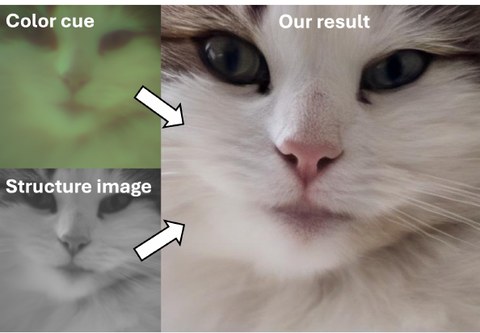
Diffusion Algorithm for Metalens Optical Aberration Correction
Harshana Weligampola, Yuanrui Chen, Abhiram Gnanasambandam, Weiheng Tang, Dilshan Godaliyadda, Hamid R. Sheikh, Qi Guo, Stanley H. Chan ICASSP, 2026 / IEEE Xplore A dual-branch diffusion model, built on a pre-trained Stable Diffusion XL backbone, that reconstructs a sharp full-color image from two metalens captures — a bandpass-filtered grayscale structure image and a heavily distorted color cue — outperforming existing deblurring and pansharpening methods. |
|
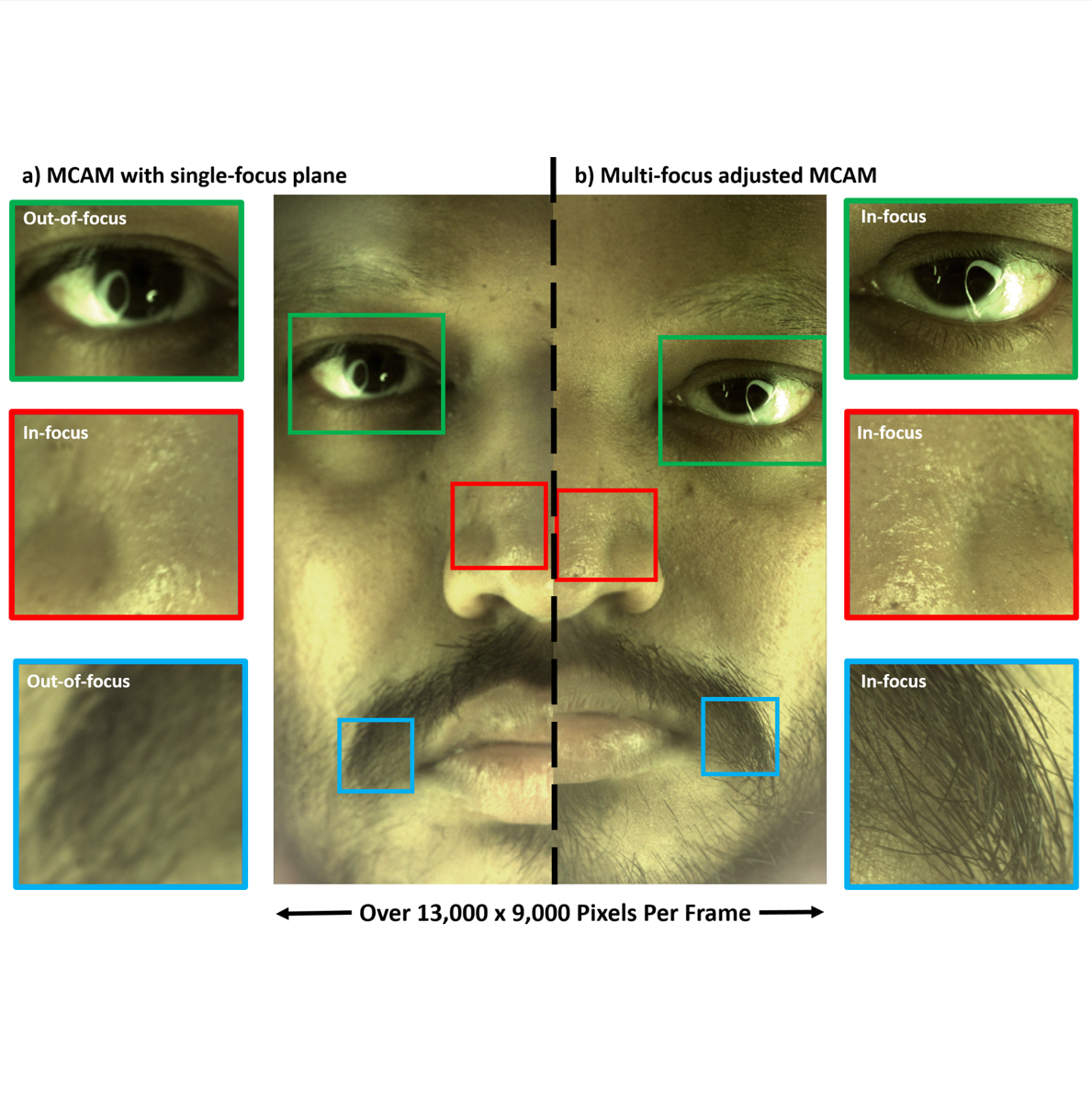
Recording dynamic facial micro-expressions with a multi-focus camera array
Lucas Kreiss*, Weiheng Tang*, Ramana Balla, Xi Yang, Amey Chaware, Kanghyun Kim, Clare B. Cook, Aurelien Begue, Clay Dugo, Mark Harfouche, Kevin C. Zhou, Roarke Horstmeyer (* equal contribution) Biomedical Optics Express, 2025 / arXiv We developed a multi-focus imaging system comprising a 54-camera array by adjusting focal plane distribution to capture dynamic facial expressions with high resolution, large field-of-view, and extended depth-of-field. |
|
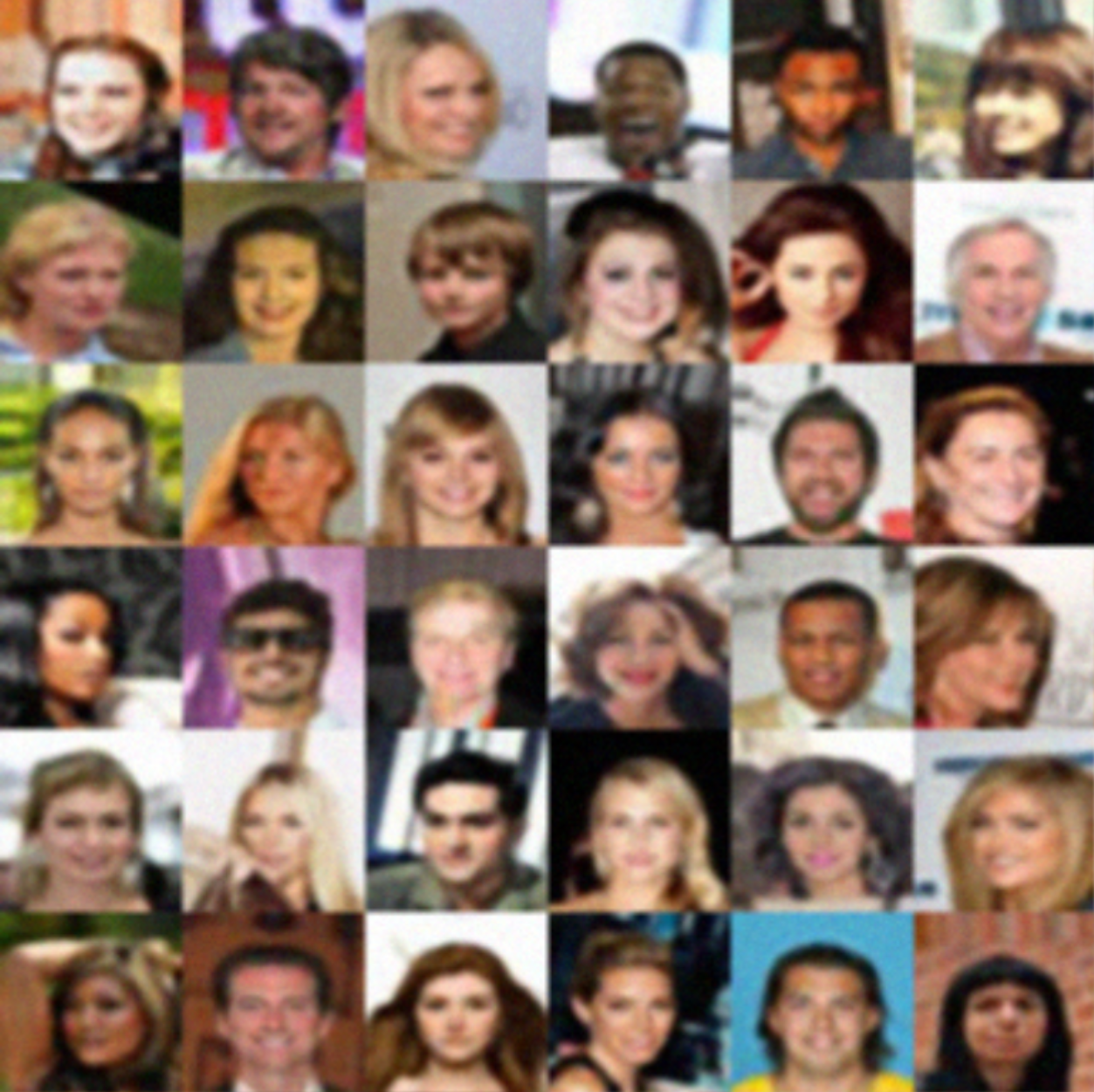
Learning Diffusion Model from Noisy Measurement using Principled Expectation-Maximization Method
Weimin Bai, Weiheng Tang, Enze Ye, Siyi Chen, Wenzheng Chen, He Sun ICASSP, 2025 / arXiv We proposed a principled EM framework for learning clean diffusion models from noisy measurements with arbitrary corruption types, enhancing the E-step of EMDiffusion by upgrading the DPS algorithm to a plug-and-play Monte Carlo (PMC) method. |
|
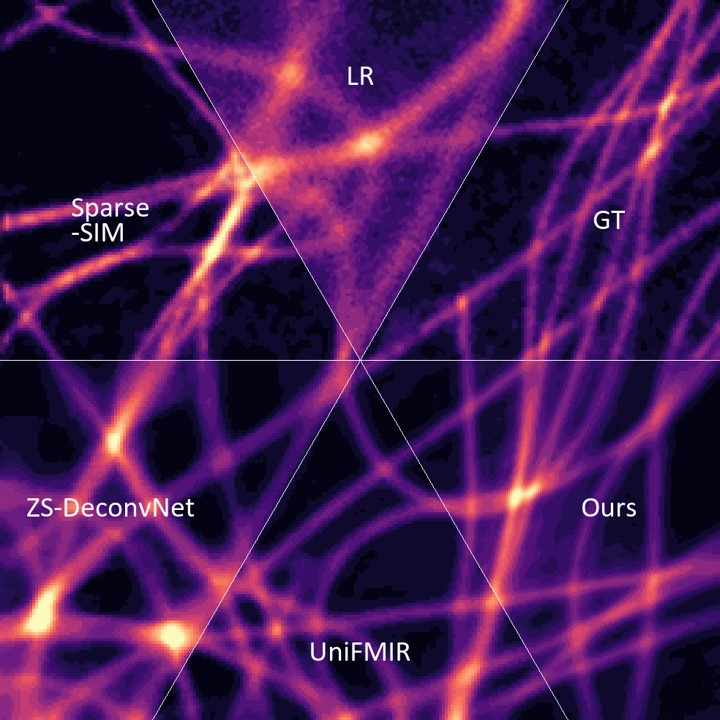
Microscopic image restoration and uncertainty quantification using physics-informed generative models
Weimin Bai, Shaochi Ren, Enze Ye, Weiheng Tang, He Sun Proc. SPIE 13333, 2025 / DOI We paired score-based image priors with a physics-informed likelihood to restore structured-illumination microscopy data, outperforming Sparse-SIM, ZS-DeconvNet and UniFMIR by more than 5% in both PSNR and SSIM while additionally producing per-pixel uncertainty estimates that those baselines do not provide. |
|
Template from Jon Barron. |